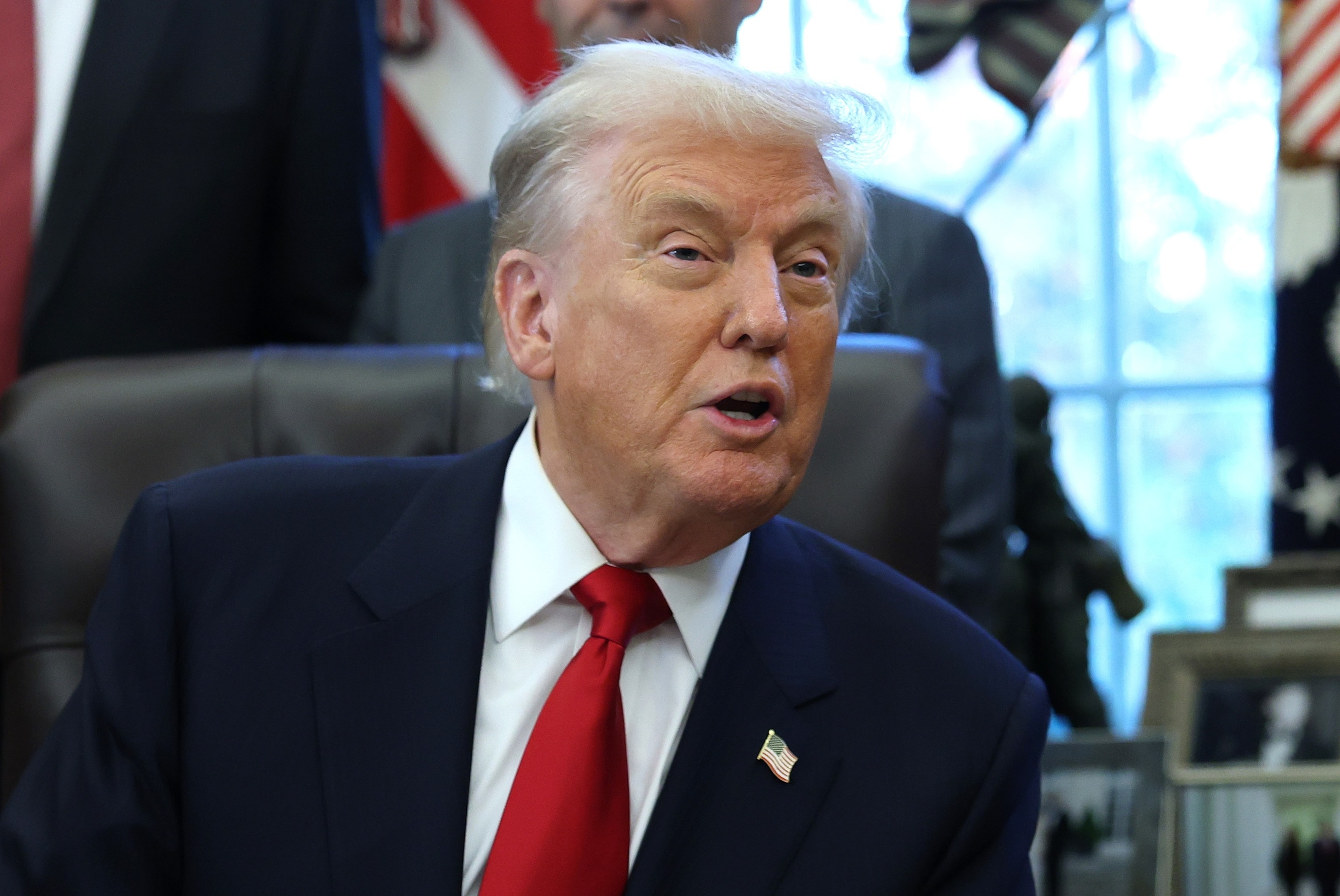
President Donald Trump is considering issuing $2,000 tariff rebate checks to Americans as a way to offset rising costs, a move that has drawn both attention and scrutiny.
The idea of sending $2,000 rebate checks comes amid ongoing inflationary pressures that continue to strain household budgets across the United States. Trump’s administration has framed the measure as a response to higher prices for everyday goods, which have been partly attributed to tariffs on imported items. The checks would aim to provide immediate financial relief, helping families cover the increased cost of groceries, electronics, and other consumer products.
White House representatives have characterized the initiative as a “direct aid system” for families affected by commercial regulations, stressing that its purpose is to lessen the financial strain resulting from increased import expenses. Nevertheless, the proposition has not yet been officially outlined, leaving inquiries regarding eligibility, financing, and scheduling unresolved.
Economic Impact Assessment
Economic experts are divided on the effectiveness of such rebate checks. On one hand, providing direct cash payments could stimulate short-term consumer spending, potentially boosting retail sales and helping the economy weather periods of slow growth. For households struggling with high prices, receiving a lump-sum payment could provide tangible relief and improve disposable income for essential purchases.
Conversely, detractors contend that this initiative might fail to tackle the fundamental drivers of inflation, including interruptions in the supply chain, scarcity of workers, or fluctuating energy costs. Apprehensions exist that a rapid injection of funds could intensify price increases, possibly worsening inflationary patterns instead of alleviating them. Furthermore, the expense associated with issuing these payments—projected to amount to tens of billions of dollars—prompts inquiries regarding fiscal prudence and its potential effect on the national debt.
Questions regarding eligibility and dissemination
Key details about who would qualify for the proposed $2,000 checks remain unclear. Some analysts suggest that the rebate could target low- and middle-income households, who are most affected by rising prices, while others speculate that it may be distributed broadly, similar to previous stimulus programs. Determining eligibility criteria, verification processes, and delivery methods will be critical to ensuring that the payments reach those who need them most efficiently.
Historically, comparable refund programs, like the 2008 Economic Stimulus Act and the 2020 pandemic aid payments, utilized income limits and tax filing information to pinpoint eligible individuals. Although these initiatives offered immediate financial assistance, they also underscored implementation hurdles, such as slow distribution and obstacles in reaching communities with limited banking access.
Political implications
The proposal carries significant political weight, particularly in an election-year context. Advocates for the rebate argue that it demonstrates a commitment to supporting American families facing economic hardship, potentially strengthening public approval for the administration. It also aligns with Trump’s broader messaging on trade, highlighting efforts to mitigate the impact of tariffs on domestic consumers.
Conversely, opponents caution that using taxpayer funds to offset trade policy consequences may be seen as a short-term fix that fails to tackle structural economic issues. Some lawmakers have raised concerns that the plan could disproportionately benefit higher-income households or large corporations, depending on how eligibility rules are structured. Debates in Congress over funding and authorization are likely to shape the ultimate feasibility of the initiative.
Historical context of rebate checks
The United States has a track record of distributing direct financial aid to households during times of economic hardship. Past instances include the Economic Stimulus Act of 2008, which offered rebates of up to $600 for individuals and $1,200 for married couples, and the several rounds of COVID-19 relief payments issued in 2020 and 2021. These initiatives aimed to rapidly infuse capital into the economy, bolstering consumer expenditures and stabilizing market demand.
While past programs offer lessons in implementation, the proposed tariff rebate has a distinct motivation: compensating consumers for costs incurred due to trade policies rather than broader economic crises. This focus highlights the unique intersection of trade policy, domestic consumer protection, and fiscal policy that the administration is attempting to navigate.
Possible difficulties and hazards
Several logistical and policy challenges could arise from issuing $2,000 tariff rebate checks. First, the sheer scale of the program would require careful planning to avoid delays or errors in distribution. Second, there is the question of funding: whether the payments would be financed through federal borrowing, reallocation of existing resources, or a combination of approaches. Finally, the administration must consider the broader economic implications, including the possibility that rebates could temporarily boost demand, putting upward pressure on prices.
Economic experts also point out that while rebates might offer short-term comfort, they don’t address the fundamental forces driving inflation. To guarantee that the advantages of these reimbursements endure, modifications to trade policies, enhancements in supply chains, and specific financial interventions could be essential. Without complementary systemic changes, detractors contend that direct payments could merely act as a temporary fix instead of a lasting remedy.
Public Response and Anticipations
Initial public responses have been varied. A segment of consumers embraces the prospect of prompt financial aid, perceiving the rebate as a means to alleviate escalating costs for groceries, utilities, and daily necessities. Conversely, others voice doubts, questioning the adequacy of the payments or their timely arrival to effectively mitigate economic strains.
Market responses have also been cautious. Financial analysts note that while consumer spending could see a temporary boost, long-term economic outcomes will depend on broader macroeconomic trends, including interest rates, global trade dynamics, and domestic fiscal policy.
Balancing short-term relief and long-term strategy
The proposition for a $2,000 tariff refund highlights the persistent difficulty in reconciling immediate financial aid with sound fiscal management. Although direct monetary disbursements can provide short-term assistance to families contending with rising prices, specialists warn that these actions do not replace thorough economic approaches that tackle supply networks, commercial regulations, and fundamental inflationary pressures.
As the administration explores the feasibility of issuing these rebate checks, lawmakers, economists, and the public will closely monitor the initiative’s design and potential impact. The ultimate success of the program will depend not only on its ability to deliver funds efficiently but also on how it integrates with broader policies aimed at stabilizing prices and supporting long-term economic growth.
For Americans navigating rising costs, the proposed $2,000 rebate represents both an opportunity for immediate relief and a reminder of the complexities inherent in addressing inflation through direct cash payments.