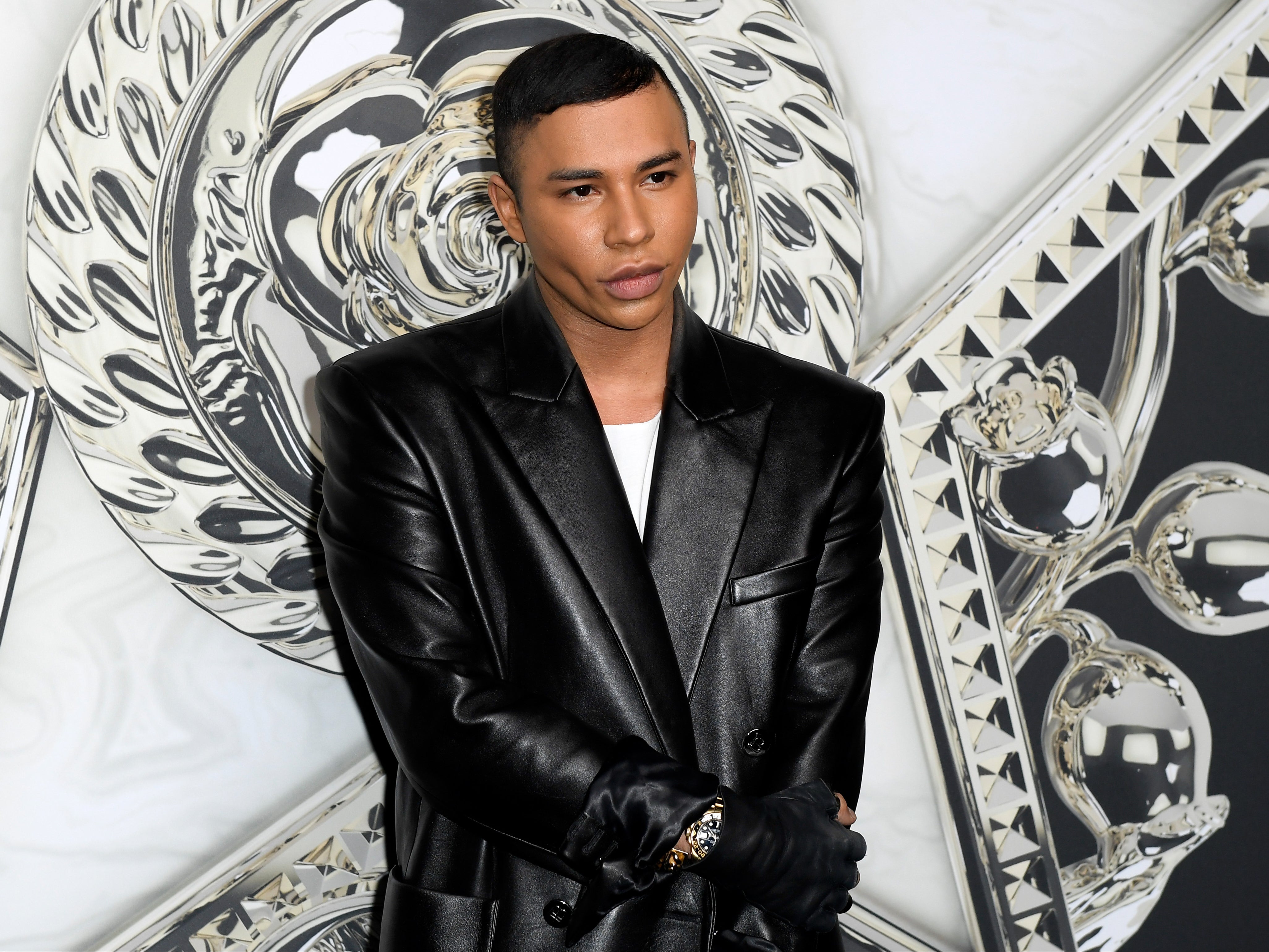
Olivier Rousteing stands as a pivotal figure in the contemporary fashion landscape, steering the renowned Parisian house Balmain to new heights since assuming the role of creative director in 2011. His influence extends far beyond the runway, permeating cultural spheres, social media innovation, and the evolving discourse on diversity in luxury fashion. Understanding Rousteing’s impact requires an examination of his unique design language, his strategies for brand transformation, and his broader cultural significance.
Pioneering at Balmain: An Evolving Perspective
When Olivier Rousteing assumed control of Balmain at just 25, doubts emerged about his background and creative direction, yet the house, long celebrated for its classic Parisian refinement, stood at a pivotal moment, and his daring vision ultimately reshaped Balmain’s identity for the modern era.
Rousteing injected exuberance into Balmain’s collections, blending opulent embellishments, razor-sharp tailoring, and a rock-chic sensibility. His distinctive use of structured silhouettes, rich embroidery, and military-inspired details became signatures, capturing the imagination of a global audience. The so-called “Balmain Army”—a coterie of high-profile celebrities and models—soon emerged as ambassadors of this aesthetic, creating an instant visual language that resonated across borders.
Pioneering Diversity and Representation
One of Rousteing’s most profound contributions lies in championing diversity and inclusivity within the fashion industry. As a Black, openly gay creative director in a sector long criticized for its lack of representation, Rousteing challenges traditional norms both through casting choices and personal example. His runways consistently spotlight models of various ethnicities and backgrounds, positioning Balmain as a leader in progressive representation.
Rousteing’s own story as an adopted child of mixed ethnicity, and his willingness to speak publicly about issues of identity and belonging, have inspired wider conversations within and outside fashion. Documentaries and interviews with Rousteing, such as the film “Wonder Boy,” delve into these themes, enhancing his status as a role model for the next generation of creatives from diverse backgrounds.
Harnessing the Power of Social Media
Long before many luxury brands embraced digital culture, Rousteing recognized the transformative potential of social media. He became one of the first major designers to curate an Instagram presence that was both personal and aspirational. Under his leadership, Balmain utilized digital platforms not only for marketing but also for fostering a direct dialogue with consumers.
Rousteing’s collaborations with celebrities—including Kim Kardashian, Rihanna, and Beyoncé—turned Balmain from a traditional maison into a phenomenon synonymous with pop culture. By blending haute couture with the immediacy of celebrity and interactive technology, Rousteing dismantled barriers between designer and audience. Balmain’s digital-first approach has generated unprecedented engagement, positioning the house as a benchmark for innovation in fashion communications.
Redefining the Essence of Traditional Luxury
Olivier Rousteing’s influence also arises from his readiness to reinterpret the traditional language of luxury, and collaborations with high-street brands such as H&M helped make Balmain’s famed craftsmanship more accessible by introducing its elaborate aesthetics to a broader audience; the project, which became a fast sellout within hours, highlights Rousteing’s keen grasp of contemporary consumer expectations for exclusivity blended with attainable style.
He also pushed the Balmain brand forward by rolling out accessories, eyewear, and even metaverse-driven digital fashion ventures, extending the house’s influence while preserving its core identity. Rousteing’s commitment to innovation disrupts the insularity of conventional fashion and encourages other houses to explore new approaches to branding and distribution.
Cultural Impact and Enduring Legacy
Rousteing’s personal style and public image reflect a dynamic fusion of fashion, music, and contemporary social currents, with his creations appearing on global red carpets, in high-profile music videos, and across major world tours, where they have helped redefine Balmain as a beacon of empowerment and individual expression. At the same time, Rousteing’s candid approach to identity and resilience resonates worldwide, signaling a broader shift in perceptions of leadership throughout creative fields.
Analysts and journalists credit Balmain’s enduring expansion in both revenue and cultural relevance to Rousteing’s comprehensive vision, which blends heritage with contemporary influences, fuses digital storytelling with artisanal craftsmanship, and balances exclusive couture with wider accessibility.
Olivier Rousteing’s path at Balmain highlights how a distinctive creative outlook, aligned with cultural awareness and technological insight, can reshape an entire maison’s identity. By reframing the possibilities of a major fashion house, he blends its legacy with contemporary energy, generating an impact that moves across both style and culture. His ongoing narrative continues to motivate others, pointing to what can unfold when imagination, boldness, and human connection sit at the heart of innovation.